
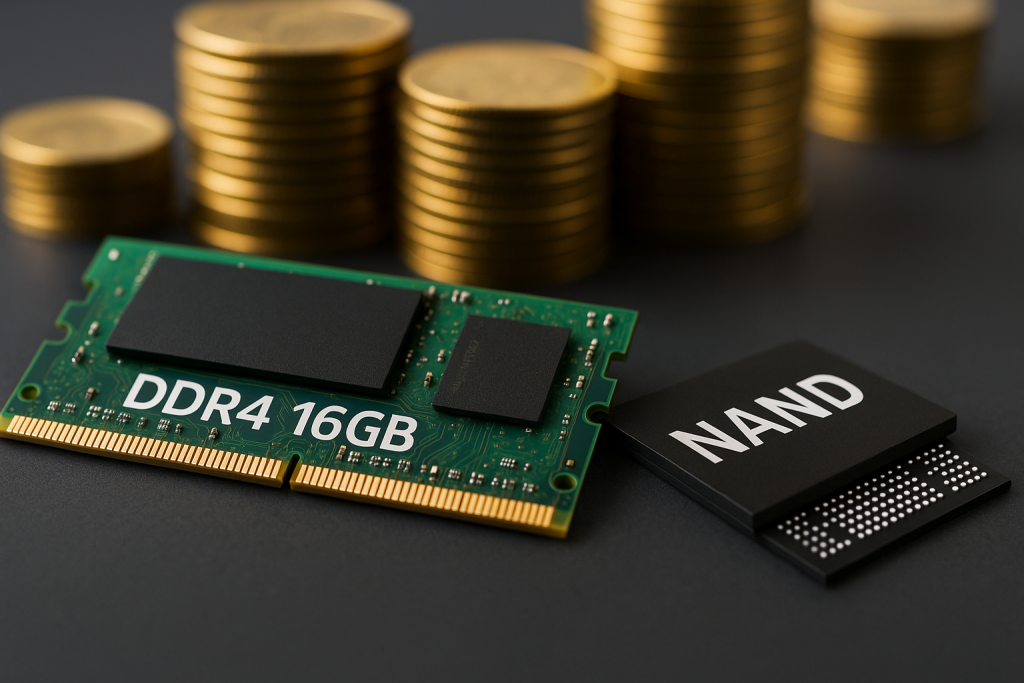
A fresh global memory chip shortage is driving up prices for DRAM and NAND, with major suppliers warning of tighter inventories through early 2026. For consumers, that means more expensive laptops, desktops and SSDs over the next few months.
What is happening to DRAM and NAND prices
Memory makers across Asia, including the largest DRAM and NAND producers, have signalled that contract and spot prices are rising sharply after several quarters of underinvestment and production cuts. Demand from AI data centres, new smartphones and next-generation consoles is soaking up capacity that would normally feed the PC and laptop market.
Industry trackers report double-digit percentage jumps in DRAM contract prices quarter-on-quarter, with some high-performance DDR5 modules seeing even steeper increases. NAND flash, used in SSDs and many external drives, is also moving higher after sitting at multi-year lows in 2023–2024. Suppliers are prioritising higher-margin enterprise and server customers, leaving consumer OEMs to compete for the remaining volume.
PC and laptop manufacturers are already being quoted higher bill-of-materials costs for configurations with 16GB and 32GB of RAM, as well as 1TB and 2TB SSDs. Channel distributors in Europe and the UK are starting to adjust retail pricing on popular DDR4 and DDR5 kits, plus mainstream NVMe SSDs, in anticipation of further hikes.
Who will feel the impact first
The first visible impact is likely to be on mid-range and high-end laptops and prebuilt desktops that rely on 16GB or more of RAM and 1TB+ SSDs. Retailers may keep entry-level 8GB/256GB machines at similar price points for now, but will quietly reduce discounts or remove free upgrade promotions on more capable models.
DIY PC builders and upgraders will see the change directly in component prices. DDR5 kits that were trending down in 2024 are now stabilising or reversing, especially higher-speed modules aimed at gaming and content creation. Large-capacity NVMe SSDs, which had become relatively affordable, are expected to climb in price as NAND contracts reset.
External SSDs for travel and photography, as well as USB-C portable drives, are also exposed because they use the same NAND flash as internal SSDs. Any product that relies on high-capacity flash storage is at risk of price adjustments or delayed restocks if suppliers cannot secure enough chips.
How this shortage compares to previous cycles
The memory market is cyclical, but this shortage is being shaped by a different mix of demand. Previous spikes were often driven by smartphones and PCs alone. This time, AI training clusters, cloud providers and high-bandwidth server platforms are absorbing a large share of DRAM output, while high-capacity SSDs for data centres are tightening NAND supply.
Unlike the pandemic-era supply crunch, logistics and shipping are not the main bottlenecks. The constraint is wafer capacity and the time it takes to ramp new process nodes. Memory makers cut investment when prices were low, and those decisions are now feeding through into limited output just as demand rebounds.
For consumers, that means fewer obvious shortages on shelves and more subtle changes: smaller SSDs in base configurations, slower RAM in budget builds, and fewer aggressive discounts during sales events. The impact is financial and spec-related rather than outright unavailability.
What buyers should do now
If you were already planning a laptop or desktop purchase in the next three to six months, it is worth checking current configurations and prices rather than waiting for bigger discounts that may not appear. Focus on getting enough RAM and storage up front, because upgrade paths on many thin-and-light laptops are limited or soldered.
For PC builders, consider locking in memory and storage first, as CPU and GPU pricing tends to move on a different cycle. If you need high-capacity SSDs for editing or backup, it may be sensible to buy sooner rather than later, especially for 2TB and above.
External drives are another area to watch. Our Best External SSDs for Travel & Photography (2025 Expert Guide) explains how to balance capacity, speed and reliability if you decide to buy before prices climb further.
If you are not in a hurry, monitor official documentation from CPU and motherboard vendors such as the Intel memory support pages and AMD platform compatibility lists to see which RAM speeds and configurations are officially supported. That can help you avoid overpaying for modules that will not deliver a real-world benefit on your system.
Short-term pain, long-term normalisation
Memory makers are already signalling plans to increase capital expenditure, but new capacity will not appear overnight. The most likely scenario is elevated DRAM and NAND pricing through much of 2025, with gradual easing as new lines come online and demand normalises.
For now, the practical move is simple: be deliberate about any RAM or SSD purchase, avoid buying more speed than your platform can use, and prioritise capacity where it directly affects your work, gaming or media storage.
If you rely heavily on portable storage, pairing a new drive with the advice in How to Choose an External SSD (2025 Beginner Guide) can help you avoid unnecessary upgrades while the market is tight.