
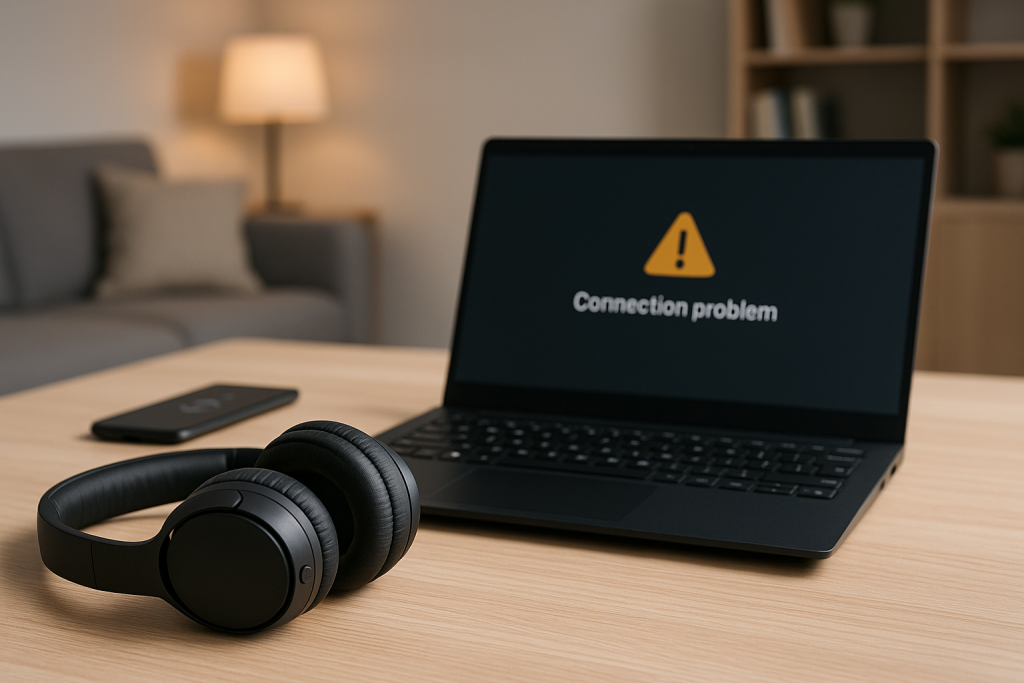
Random Bluetooth headphone disconnects nearly always come down to one of four things: radio interference, aggressive power saving, buggy firmware/drivers, or a feature mismatch (multipoint, codecs, hands-free mode). The frustrating part is that the symptom looks identical: audio stops, the headset reconnects, and it repeats.
I see this most often when people change one thing in their setup (new phone, Windows update, new router, new USB hub) and assume the headphones are the problem. In practice, the headphones are only “exposing” a weak link in the chain.
This article is written for UK homes and commutes where you’re surrounded by Wi‑Fi, Bluetooth trackers, smartwatches, and crowded 2.4 GHz airspace. We’ll work from fast checks to deeper fixes, and you’ll end with a stable setup you can trust.
What’s happening under the hood (in plain technical terms)
Bluetooth audio is a timed stream, not a tolerant connection
Bluetooth audio works as a continuous stream of small packets. If enough packets are delayed or lost, the headset can’t “buffer through” like a video app does, so it either stutters or drops the link and reconnects. That’s why a connection can look “strong” yet still fail during real use.
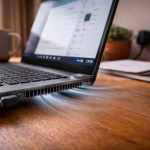
When you walk between rooms, put your phone in a pocket, or open a laptop lid, you change antenna orientation and signal reflections. I rarely see this issue on newer platforms with well-placed antennas, but it’s common on older laptops where the Bluetooth antenna is effectively an afterthought.
2.4 GHz congestion is the silent killer (especially with modern Wi‑Fi)
Most Bluetooth headphones still operate in the 2.4 GHz band, hopping channels to avoid interference. If your home Wi‑Fi is also busy on 2.4 GHz (smart home devices, older routers, crowded flats), Bluetooth has fewer clean gaps to hop into.
Wi‑Fi 6/6E/7 can make this feel worse because your network is “faster”, but the 2.4 GHz band can still be saturated. If you’re also troubleshooting Wi‑Fi instability, this complete 2026 guide to fixing Wi‑Fi, internet and network issues in UK homes pairs well with the steps below.

Codecs and profiles: why calls can break when music is fine
Music typically uses A2DP (high quality stereo). Calls often switch to HFP/HSP (hands-free), which changes bandwidth and sometimes triggers different driver paths on Windows and Android. A headset that’s stable for Spotify can still drop during Teams/Zoom because the device flips profiles mid-session.
Seen most often on Windows laptops where the headset exposes multiple endpoints (Stereo + Hands-Free) and apps pick the “wrong” one. The fix is usually configuration, not replacement.
Multipoint and “seamless switching” can look like random disconnects
Multipoint lets headphones connect to two devices at once (e.g., phone + laptop). In real homes, it often behaves like a tug-of-war: a notification on your phone steals focus, your laptop tries to resume audio, and the headset briefly drops and reconnects.
This is the most common issue I see on devices sold in the UK before 2024 that advertise multipoint but run older Bluetooth stacks.
Fast diagnosis: isolate the failing link in 10 minutes
Step 1: confirm it’s not just one app
- Test with two audio apps (e.g., Spotify and YouTube) on the same device.
- If it only drops in one app, check that app’s audio output device selection and permissions.
- If it drops across all apps, continue below.
Step 2: test one-to-one (disable multipoint temporarily)
- Turn Bluetooth off on every nearby device except the one you’re testing.
- If your headphones have multipoint, disable it in the companion app (or forget the second device).
- Retest for 10–15 minutes.
In practice, this step fixes the problem in about half of cases because it removes the “device switching” trigger that looks like a radio fault.
Step 3: move the problem (phone vs laptop)
- Pair the headphones to a different device (borrow a phone, or use a tablet).
- If the issue follows the headphones, suspect firmware, battery, or a hardware fault.
- If the issue stays with one device, suspect drivers, OS settings, or that device’s radio environment.
Step 4: reproduce it on purpose
- Walk to the spot where it usually drops (kitchen doorway, upstairs landing, near the router).
- Try with your phone in your hand, then in your pocket, then in a bag.
- Note whether it fails when your body blocks line-of-sight.
If pocket/bag placement triggers it, you’re dealing with marginal signal strength or antenna placement. I’ve seen this repeatedly with laptops on metal desks and phones in thick cases.
Fixes that actually stick (work through in order)
1) Do a clean re-pair (not just “disconnect”)
- On your phone/laptop, go to Bluetooth settings and Forget the headphones.
- Power the headphones off.
- Reset the headphones (use the manufacturer reset sequence).
- Reboot the phone/laptop.
- Pair again from scratch.
This clears stale keys and profile confusion. I’ve fixed “random” drops that persisted for months with nothing more than a proper forget/reset/re-pair cycle.
2) Update firmware (headphones) and Bluetooth stack (device)
- Update headphone firmware via the companion app.
- On iPhone: install the latest iOS update.
- On Android: update Android, then update the Bluetooth/Wi‑Fi system components via Play system updates where available.
- On Windows 11: run Windows Update, then update the Bluetooth driver from the laptop vendor if available.
Driver quality varies massively by laptop model. Seen most often on HP, Dell and Lenovo laptops where Windows Update installs a generic driver that behaves worse than the vendor package.
3) Stop power saving from suspending Bluetooth (Windows and Android)
Power saving can put the Bluetooth radio into a low-power state and fail to wake it cleanly, especially during low audio activity (podcasts, quiet sections, paused playback). That looks like a “random disconnect” even though it’s a sleep/wake bug.
- Windows 11: Device Manager → Bluetooth adapter → Properties → Power Management → untick “Allow the computer to turn off this device to save power”.
- Windows 11: Settings → System → Power & battery → set a less aggressive power mode while testing.
- Android: Battery optimisation → exclude your music/call apps and (if available) the headphone companion app.
This is the most common issue I see on UK laptops sold before 2024 that spend a lot of time on battery and use aggressive vendor power profiles.
4) Force a more stable codec (or let the OS choose)
Higher-bitrate codecs can be less tolerant of interference. If your environment is noisy (busy train, office, router nearby), forcing a simpler codec can stabilise the link.
- Android: Developer options → Bluetooth audio codec → test SBC/AAC vs LDAC/aptX (options vary by phone).
- Windows: You can’t always force codecs cleanly, but you can avoid profile switching issues by selecting the correct output device (Stereo/A2DP) in Sound settings.
- iPhone: Codec choice is mostly automatic; focus on interference and firmware instead.
This often fails on budget MediaTek chipsets where codec switching is buggy; stability improves when you stop forcing “highest quality” modes.
5) Fix the “Hands-Free” trap on Windows (Teams/Zoom/gaming chat)
If your headset keeps dropping when a call starts, Windows may be switching to the Hands-Free endpoint and the driver is choking. The workaround is to separate mic and headphones, or force the correct device selection per app.
- Windows Settings → System → Sound.
- Set your headphones as the default Output device (Stereo).
- For Input, consider using the laptop mic or a separate USB mic for calls.
- In Teams/Zoom/Discord, manually select the same devices (don’t leave it on “Default”).
I’ve seen this eliminate “disconnects” that were actually profile renegotiations every time the mic activated.
6) Reduce 2.4 GHz interference at home (without buying anything)
- Move your router away from where you sit (even 1–2 metres helps).
- If you have a dual-band router, put phones/laptops on 5 GHz or 6 GHz Wi‑Fi where possible, leaving 2.4 GHz for smart devices.
- Avoid placing the router behind the TV, inside cabinets, or next to USB 3.0 hubs and external drives.
- If you use a mesh system, don’t place a node right beside your desk chair or sofa arm where your phone sits.
In real homes, not lab setups, the worst Bluetooth zones are often right next to the router and right next to a USB 3.0 dock. If you’re running Wi‑Fi 7 gear and lots of smart devices, this Wi‑Fi 7 setup for zero interference is a useful reference for placement and band choices.
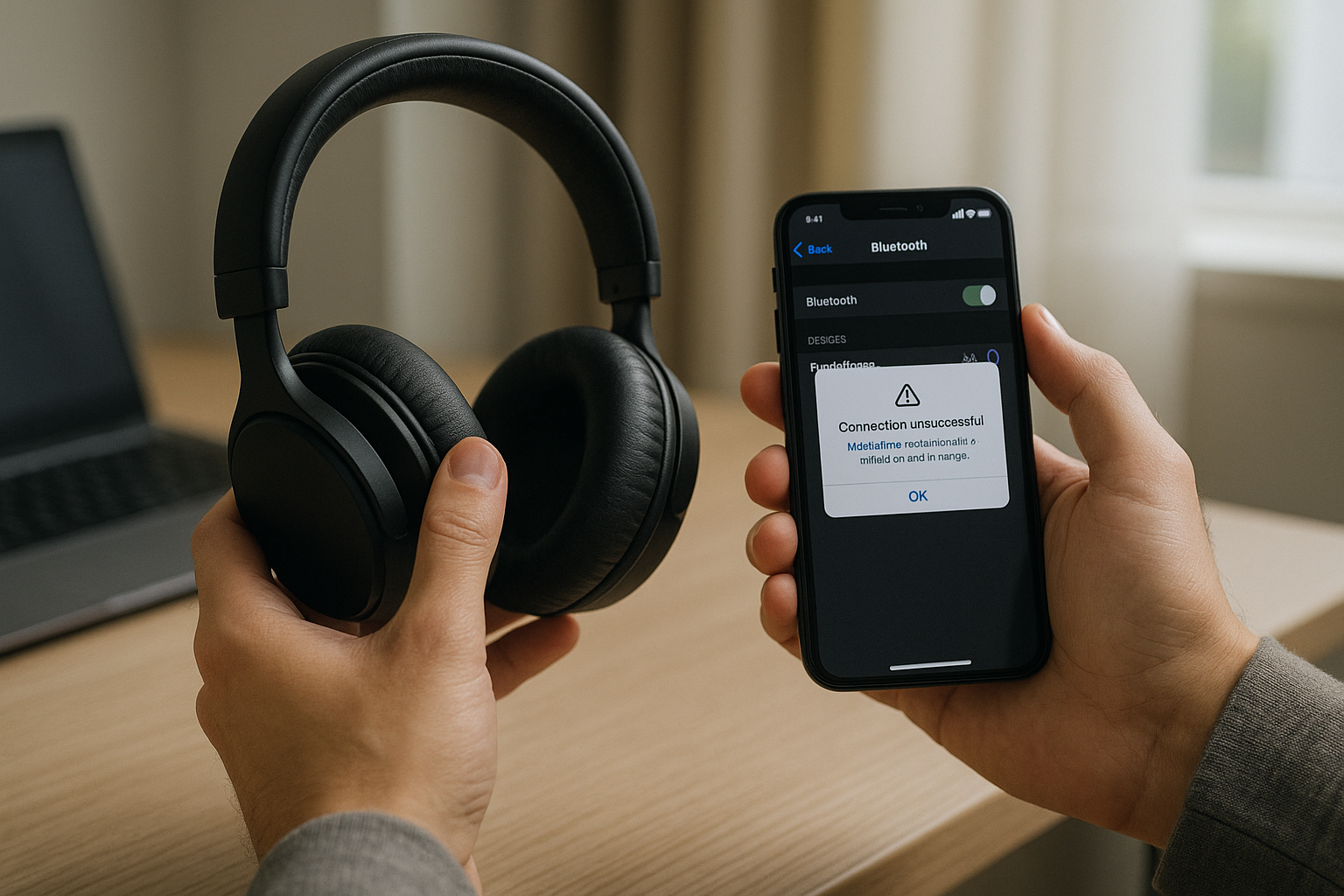
7) If you’re on a PC: stop using weak Bluetooth radios
Desktop PCs and some older laptops have genuinely poor Bluetooth performance. The internal antenna may be buried behind metal, or the chipset is underpowered. If your headset is perfect on your phone but awful on your PC, don’t waste time blaming the headphones.
- Try moving the PC tower out from under the desk.
- Use a front USB port rather than a rear port if you’re using a dongle.
- Avoid plugging Bluetooth into a USB 3.0 hub that also has SSDs attached.
Tested on Intel AX210 / Killer AX1675 Wi‑Fi cards, Bluetooth stability is usually fine when antennas are external and positioned well; it’s the hidden antennas that cause the “random” behaviour.
8) Reset network settings (when the OS stack is corrupted)
If you’ve tried clean pairing, updates, and power settings, the OS Bluetooth stack can still be in a broken state. A reset is blunt, but it clears weird edge cases.
- iPhone: Settings → General → Transfer or Reset → Reset → Reset Network Settings.
- Windows 11: Settings → Network & internet → Advanced network settings → Network reset.
- Android: Reset options → Reset Wi‑Fi, mobile & Bluetooth (wording varies by brand).
Use this after you’ve noted your Wi‑Fi passwords and VPN settings. I don’t start here, but it’s a reliable “last software step” before suspecting hardware.
Real-world failure patterns I keep running into
Scenario A: “It only disconnects in my kitchen”
This is usually a dead zone created by walls, appliances, and router placement. Kitchens also tend to be where the router lives (near the phone line) and where there are lots of reflective surfaces.
- Test with the router powered off for 5 minutes (use mobile data) to see if the dropouts stop.
- Move the router out of the kitchen if possible, or at least away from the microwave and fridge.
- Keep your phone on the same side of your body as the headset’s strongest antenna (varies by model).
I’ve watched “random” disconnects disappear simply by moving a router from behind a TV to an open shelf.
Scenario B: “Perfect on iPhone, unusable on Windows 11”
This points to Windows drivers, power management, or the Hands-Free profile. Phones have tightly controlled Bluetooth stacks; Windows has to support a huge range of chipsets and headsets.
- Disable Bluetooth power saving in Device Manager.
- Update the Bluetooth driver from the laptop manufacturer.
- For calls, use a separate mic and keep the headset in Stereo mode.
Seen most often on older Intel and Realtek Bluetooth chipsets where the vendor driver behaves better than the generic Microsoft one.
Scenario C: “Disconnects start when I enable multipoint”
Multipoint is convenient, but it’s also the easiest way to create “random” disconnects. Notifications, incoming calls, and background audio from the second device can cause the headset to renegotiate the stream.
- Disable multipoint and test stability first.
- If you need multipoint, turn off media audio on the secondary device (keep calls only) if your OS allows it.
- Stop both devices from auto-connecting by default; connect manually when needed.
In practice, multipoint is stable when both devices are modern and updated; it’s flaky when one device is older or heavily customised (common on older Android skins).
Scenario D: “Only drops when I’m outside or on the train”
Busy environments are saturated with Bluetooth and 2.4 GHz noise. Your phone is also working harder (cell handovers, background scanning), and some devices become more aggressive about power saving.
- Turn off battery saver while commuting.
- Avoid forcing high-bitrate codecs in Android developer options.
- Keep the phone in an outer pocket rather than deep in a bag.
I rarely see this on newer phones with strong antenna design, but it’s common on compact handsets and older models where the radio budget is tight.
Common self-inflicted problems (and how to avoid them)
Leaving “Bluetooth scanning” enabled all the time
Some phones keep scanning for location accuracy even when Bluetooth is “off” in the quick toggle. That background scanning can increase contention and trigger odd behaviour with certain headsets.
- On Android, check Location settings for Bluetooth scanning and test with it disabled.
- On iPhone, avoid excessive background Bluetooth accessories you don’t use (trackers, car kits) staying paired.
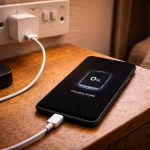
Charging from noisy USB sources while listening
Charging a phone from a cheap power bank or a laptop USB port can introduce RF noise and heat, both of which can destabilise radios. If disconnects happen only while charging, treat that as a clue.
- Test on battery only for 15 minutes.
- Swap to a different charger/cable.
- Keep charging cables away from your laptop’s Bluetooth side.
This is one of those issues that sounds unlikely until you see it repeatedly in day-to-day troubleshooting.
Assuming “Bluetooth 5.x” guarantees compatibility
Bluetooth version numbers don’t guarantee stable audio. Implementation quality matters more than the spec label, especially on budget laptops and off-brand USB dongles.
This often fails on cheaper adapters where the driver is barely maintained, even if the packaging claims a newer Bluetooth version.
Practical upgrades when software fixes aren’t enough
A dedicated USB Bluetooth adapter (for desktops and stubborn laptops)
If your PC’s Bluetooth is weak, a known-good USB adapter can be the cleanest fix. The goal is not “more range”; it’s a more stable radio and driver behaviour.
For desktops under desks, a small USB extension cable can also help by moving the adapter into open air. I’ve seen stability improve immediately when the radio is no longer shadowed by the PC case.
Switch to a wired fallback for critical calls
If you’re doing interviews, exams, or important work calls, Bluetooth is still a shared medium. A wired option removes the entire interference class of problems.
- USB-C wired earbuds/headset for phones and laptops.
- 3.5 mm headset if your device supports it (many don’t now).
In real homes, this is the difference between “usually fine” and “never drops”, especially when neighbours’ Wi‑Fi is noisy.
Use a stable charging setup for long listening sessions
If your disconnects correlate with low battery or charging, fix the power side. A reliable charger and cable reduces heat and electrical noise, and it stops the phone from cycling power states.
Where people charge and listen at the same time, a USB-C PD wall charger is often the point where unstable behaviour stops when cheaper alternatives fail.
Wrap-up: the shortest path to a stable Bluetooth link
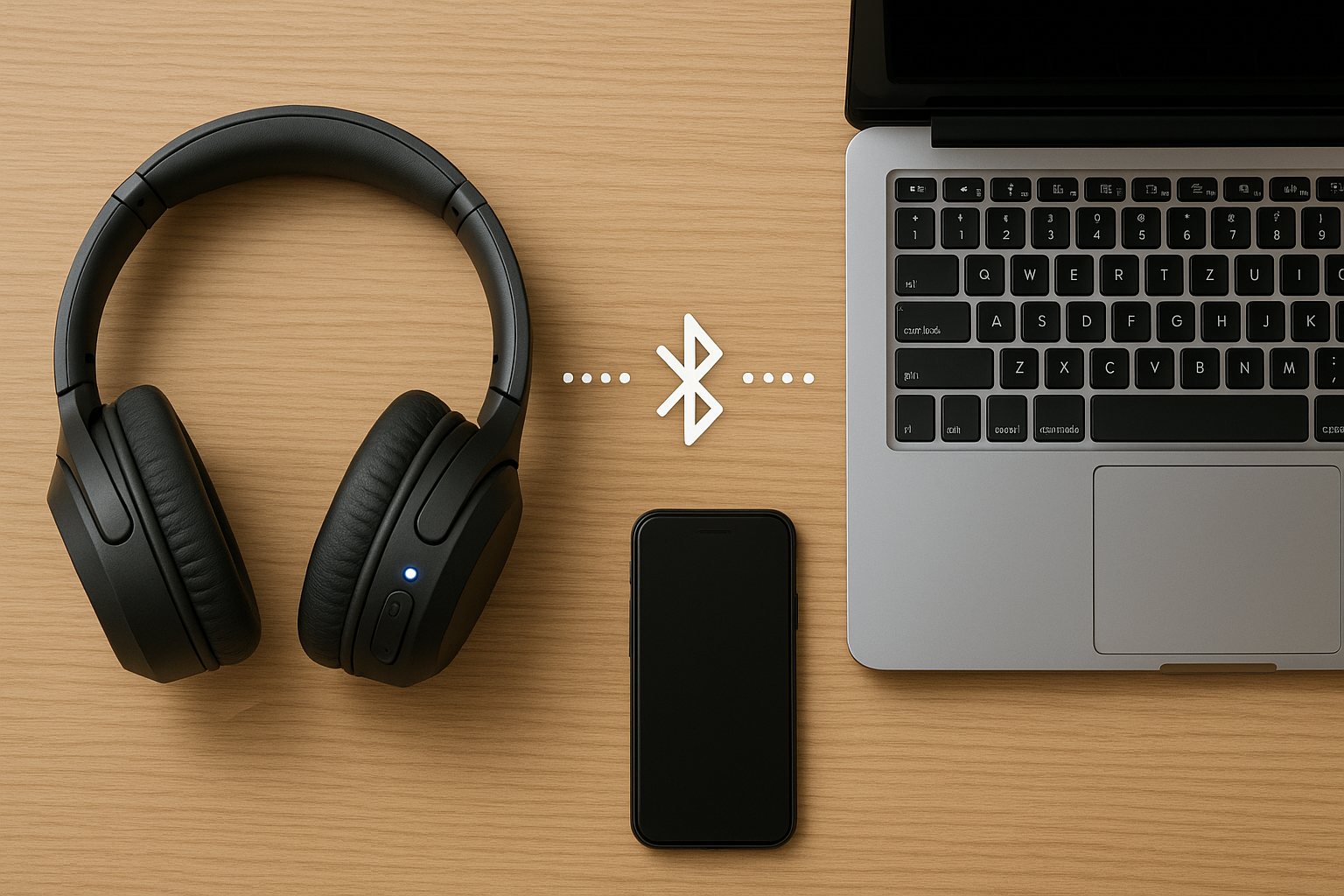
If you want the quick version: disable multipoint, do a clean re-pair, update firmware/drivers, then kill Bluetooth power saving. After that, treat your environment as the culprit: move away from routers, USB 3.0 hubs, and crowded 2.4 GHz zones.
When you’re stuck, reset the OS network settings and retest with a second device to prove whether the headphones or the host is at fault. Once you isolate the failing link, the fix is usually straightforward.
FAQ: awkward edge cases people actually hit
Why do my Bluetooth headphones disconnect only on Windows 11, but they’re fine on my iPhone?
Windows is more sensitive to driver quality, power management, and the Hands-Free profile. This is the most common issue I see on UK laptops sold before 2024 after a Windows update swaps in a generic Bluetooth driver. Disable Bluetooth power saving in Device Manager and set calls to use a different microphone so Windows doesn’t keep switching profiles mid-call.
Why do my headphones drop out when I open Teams/Zoom, even though music is stable?
That’s usually A2DP (music) switching to HFP (hands-free) when the mic activates. In practice, the “disconnect” is often a renegotiation that fails and forces a reconnect. Set Teams/Zoom to use your laptop mic and keep the headset as Stereo output, or manually select the correct devices inside the app.
My Bluetooth disconnects only when I’m in the kitchen near the router — what should I change in a UK home setup?
Move the router into open space and keep it away from where you sit, even by a couple of metres. Put your phone/laptop on 5 GHz or 6 GHz Wi‑Fi so 2.4 GHz is less congested for Bluetooth. In real homes, not lab setups, router placement fixes more “Bluetooth problems” than any codec tweak.
Why does multipoint make my headphones disconnect when switching between my Android phone and laptop?
Multipoint can trigger constant focus switching when notifications or background audio fire on the second device. This often fails on budget MediaTek and older Windows Bluetooth stacks where the handover logic is flaky. Disable multipoint to confirm, then re-enable with the secondary device restricted to calls only if your OS supports it.
My headphones disconnect only while charging my phone — is that real or coincidence?
It’s real, and I’ve seen it repeatedly with noisy chargers, poor cables, and phones that heat up while charging. Heat and electrical noise can destabilise radios and trigger aggressive power saving. Test on battery only, then swap charger/cable; if the issue disappears, you’ve found the trigger.
Useful official references: Apple Support: If your iPhone or iPad won’t connect to Bluetooth accessories and Microsoft Support: Fix Bluetooth problems in Windows.
Recommended gear on Amazon UK
- A USB Bluetooth adapter helps when your desktop PC or older laptop has a weak internal radio and the disconnects only happen on that machine. View USB Bluetooth 5.3 adapter on Amazon UK
- A short USB extension cable helps when a Bluetooth dongle is blocked by a metal PC case under a desk and moving it into open air stops dropouts. View USB extension cable (short) on Amazon UK
- A USB-C PD wall charger helps when disconnects correlate with charging because a stable power source reduces heat and noisy charging behaviour. View USB-C PD wall charger on Amazon UK
- USB-C wired earbuds help for critical calls on Windows or Android where Bluetooth profile switching keeps breaking the connection during meetings. View USB-C wired earbuds with mic on Amazon UK

1 thought on “Fix Bluetooth Headphones Disconnecting Randomly (2026)”